A buyer we'll call typical goes under contract on a Gulf-front unit on Siesta Key. The unit shows well, the price feels fair for the season, and the inspection period starts on schedule. Ten days later the deal is dead. It isn't because a home inspector found a cracked slider or a soft spot in the lanai. It's because the lender pulled the building's file and came back with one word: ineligible.
That word, not a dollar figure, is what actually ends Siesta Key condo purchases in 2026. Buyers walk into these deals bracing for a scary special assessment number. The bigger threat is quieter: whether the building can even be insured and financed before anyone gets to a number at all.
What Changed This Year
Florida's post-Surfside reforms have been rolling out in stages since 2022, but 2026 is when the mechanics tightened into something that actually bites. House Bill 913, effective July 1, 2025, raised the reserve-funding threshold from $10,000 to $25,000 per structural item, with the state setting the official 2026 figure at $25,675 after the first inflation adjustment. More consequential for buyers: as of January 1, 2026, associations can no longer vote to waive or underfund reserves for the eight structural components a Structural Integrity Reserve Study covers. That decades-old loophole, the one that let boards keep dues artificially low by skipping reserve contributions, is closed.
The deadline mechanics matter too. Existing owner-controlled associations generally had to complete their SIRS by December 31, 2025. There's a narrow exception: if a building's milestone inspection is due on or before December 31, 2026, the association can complete both studies together, but never later than that date. Buildings three stories or taller on Siesta Key, most of which cleared the 30-year age mark years ago, are squarely inside this window right now.
Here's the part that turns a compliance deadline into a closing-table problem: Citizens Property Insurance is now explicitly barred from issuing or renewing policies for condo associations that haven't completed both the milestone inspection and the SIRS. Private carriers are following the same underwriting logic. If a building can't produce these documents, it may not be insurable, and if it isn't insurable, a lender won't touch it regardless of how healthy the buyer's credit looks.
The question worth asking before you write an offer isn't "how big will the assessment be." It's "can this building get insured and financed at all." Everything else, including the price, is downstream of that answer.
Not Every Building Carries the Same Risk
Siesta Key's condo inventory splits cleanly along two lines: height and location, and those two variables determine which buildings are already through this gauntlet and which are still working through it.
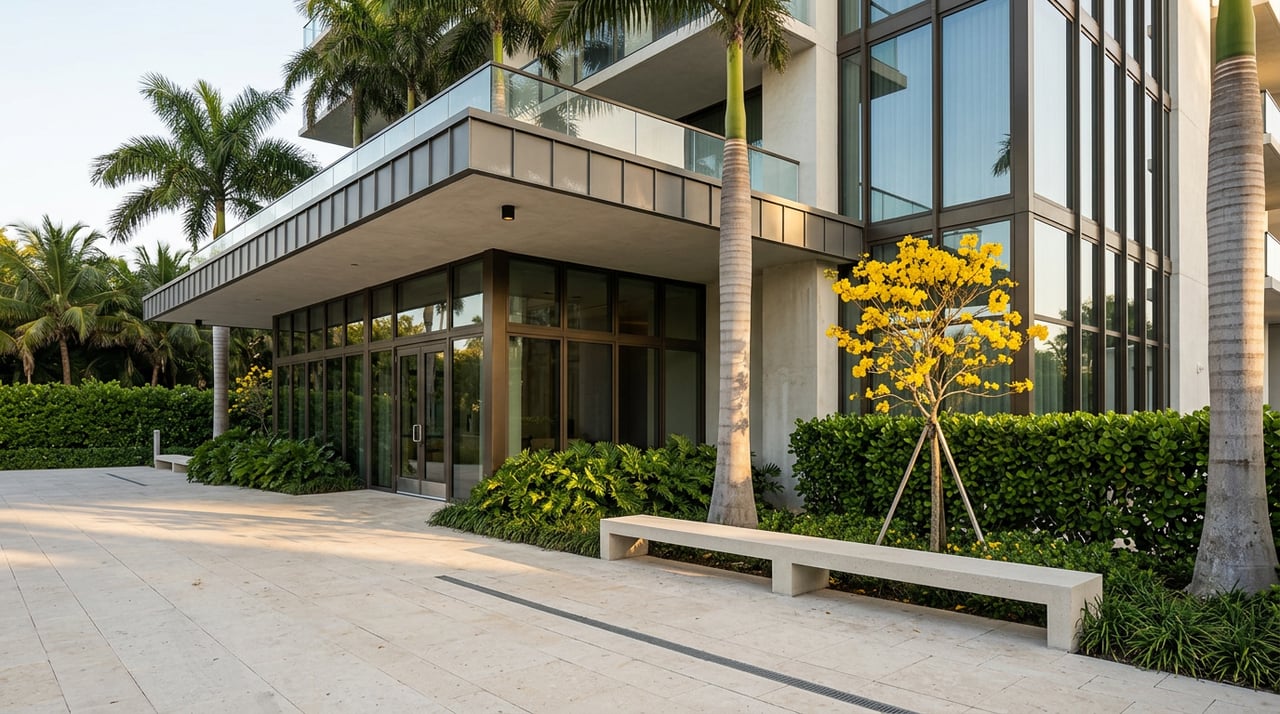
The island's Gulf-front high-rises, places like Crystal Sands, Horizons West, Island House, Jamaica Royale, and Sarasota Surf & Racquet, sit directly in the coastal, three-stories-and-taller category the law was written for. These buildings face salt exposure that accelerates concrete and rebar deterioration, which is exactly what milestone inspections are designed to catch. Older Gulf-front towers built before 1980 are the buildings most likely to be mid-crisis right now: caught between a completed inspection that found real deficiencies and a reserve fund that was never built to cover them.
Contrast that with the bay-side, lower-density buildings toward the south end and along the Intracoastal, communities like Bay Tree Club, Boca Siesta, Dolphin Bay, and Harbor Towers. Many of these are lower-rise, some fall outside the three-story threshold entirely, and their more sheltered exposure means less accelerated wear on structural components. That doesn't mean automatic safety, but it does mean a shorter list of variables to check.
The market is already pricing this difference in. Mid-rise buildings along Midnight Pass Road, the corridor that runs the length of the island's Gulf side, were showing year-over-year price declines in the 10 to 20 percent range with extended market times as of early 2026. That's not a random soft patch. It's buyers and their lenders responding to exactly the compliance and reserve questions this piece is about.
What to Actually Pull During the Inspection Period
The paperwork exists. The discipline is in requesting it early enough to act on what you find.
- The estoppel certificate. This shows exactly what the seller owes and confirms whether any assessment has already been approved.
- The most recent SIRS report and milestone inspection summary, if the building is three stories or taller. If neither has been filed, ask why, because that alone can be a financing dealbreaker.
- Two to three years of board and owner meeting minutes. Assessments are almost always discussed before they're voted on. This is where you catch the "under review" seawall repair before it becomes your problem.
- The current reserve funding percentage relative to what the SIRS says the building needs.
- The delinquency rate among owners. High delinquency stresses the whole budget and often precedes a special assessment on everyone still paying.
- The master insurance policy, including the deductible. After Hurricane Ian, several Siesta Key buildings hit owners with five-figure bills just to cover the deductible, not the repair itself.
Reading the Reserve Percentage
A single number on a budget line does a lot of predictive work if you know how to read it.
| Reserve funding level | What it typically signals |
|---|---|
| Below 30% of projected need | High likelihood of a near-term special assessment; some lenders may flag the building outright |
| 30% to 50% | Moderate risk; expect the board to be actively discussing funding gaps in minutes |
| 50% to 70% | Manageable, but confirm the SIRS timeline for major components like roof and windows |
| Above 70% | Healthy funding; assessments tend to stay in the routine, low-thousands range |
None of these numbers tell you the building is doomed or safe on their own. They tell you what question to ask next, and in a market where the average condo took roughly 100 days to sell in the first quarter of 2026, you have the time to ask it before you're locked into a contract you can't unwind cleanly.
The Financing Trap Nobody Mentions Until It's Too Late
Even a building that's structurally sound and fully reserved can still become a problem if it's classified as non-warrantable for conventional financing. The triggers are specific: insufficient reserves, pending litigation, too much short-term rental turnover relative to owner-occupancy, or too much commercial space within the building. Once a building lands in that category, buyers need cash or a specialized portfolio lender, which shrinks the pool of people who can buy there.
That matters even if you're paying cash today. Cash covers your purchase, but it doesn't fix the building's status when you go to sell in five or ten years to a buyer who needs a mortgage. A non-warrantable building isn't just a financing inconvenience at the moment of purchase. It's a resale constraint you inherit the day you close.
This is also why the current market data on Siesta Key reads the way it does. Condo price per square foot closed to roughly $690 in the first quarter of 2026, nearly matching single-family homes on the island for the first time in years. Active condo inventory sat at 241 units as of March 31, 2026, the highest in a five-year window, while list-to-sold price ratios held at 95 percent. Well-documented, well-reserved buildings are moving. The ones still sorting through compliance are the ones adding to that inventory count.
FAQ
Does every Siesta Key condo need a SIRS and milestone inspection? No. The requirement applies to condominium and cooperative buildings three or more habitable stories in height. Single-family homes, villas, and townhomes governed by an HOA rather than a condo association fall outside this law entirely.
If a special assessment gets approved after I close, am I responsible for it? Generally yes, unless the purchase contract specifically states otherwise. Sellers sometimes agree to cover an assessment approved before closing, but the obligation typically follows whoever owns the unit at the time the assessment is levied.
What's the actual difference between a milestone inspection and a SIRS? A milestone inspection is a physical structural evaluation, checking for deterioration through visual and sometimes invasive testing. A SIRS is a financial planning document that determines how much the association needs to reserve for future repairs to eight specific structural components. Buildings often complete both together, but one cannot substitute for the other.
Can I still get a mortgage on an older Siesta Key condo building? Often yes, but expect more document requests than you'd see on a newer building. Lenders now typically require the full reserve study, delinquency data, and insurance certificates before approving a loan, and a building with an incomplete SIRS or an unresolved milestone finding can stall or kill financing regardless of your own qualifications.
If you're weighing a specific building on Siesta Key and want a second set of eyes on the reserve study or the estoppel package before your inspection period runs out, that's exactly the kind of due diligence K. Veronica Lee works through with clients daily. You can also browse the current Siesta Key neighborhood guide for a closer look at what's active on the island right now. Let's Connect before you write the offer, not after.